.png)
Ensuring Reliable IoT-to-Mobile Connectivity: The Genesys Approach
Updated: Jul 22

In the world of connected products, users don’t judge your hardware by what is inside it. They judge it by how reliably it communicates with the app in their hands. If the connection fails, the product fails.
This is why reliability in IoT-to-mobile connectivity is not something we simply aim for at Genesys. It is the standard we build every product around. And it is one of the areas where Genesys operates at a level few companies can match.
Why Reliable Connections Matter
When a connected product loses its link with a mobile app, the consequences are immediate.
In MedTech, a dropped Bluetooth connection can interrupt patient monitoring.
In Industrial IoT, an unstable link can result in downtime.
In consumer devices, one failed pairing or crash can be enough for users to abandon a product entirely.
Genesys exists to eliminate these issues. Our entire engineering approach, from hardware and firmware to cloud and mobile app development, is built on a single principle: connected products must work reliably, every time.
What Makes Genesys Different
Most companies specialise in either software or hardware. Very few can deliver the entire IoT ecosystem from device to app. Genesys does.
We design and build:
Hardware
Embedded firmware
Wireless communication protocols
Cloud infrastructure
Cross-platform mobile apps
Because we own the entire engineering chain, every layer is integrated, tested, and optimised to work as a unified system. This eliminates the integration problems that occur when multiple vendors or teams attempt to connect disconnected parts together.
As George Bou-Rizk, Co-CEO and Software Engineering Manager at Genesys, explains:
“Connectivity is already solved at Genesys because we develop the device, the communication modules, the app and the cloud as one single ecosystem.”
A Track Record of Medical-Grade Reliability

One of our flagship achievements is the Electrogenics MOSkin radiation dosimeter mobile app, a mobile-connected medical device supported by a custom-built iPad application engineered in React Native.
The MOSkin™ system achieved full FDA 510(k) clearance, validating not only the device hardware but also the supporting software and mobile application as part of a regulated medical system. This milestone demonstrates Genesys’ ability to deliver mobile-connected solutions that meet the strict requirements of medical device regulators.
Genesys served as the lead engineering partner for the MOSkin™ project, delivering end-to-end system integration including electronics design, embedded firmware, mobile application development, and regulatory alignment under ISO 13485. The mobile app plays a critical role in enabling clinicians to view, manage, and record real-time radiation dose data in a safe, reliable, and compliant manner.
This project is a strong example of how Genesys approaches mobile app development not as a standalone deliverable, but as an integral component of a safety-critical, regulated system.
You can explore this project in more detail in our blog post “Engineering Precision: Genesys’ Role in Bringing MOSkin™ to Life.”
Showcasing IoT Excellence: Key Projects
Beyond MOSkin™, Genesys has delivered and is currently developing several standout IoT mobile applications, including:
AI-Enhanced Wound Monitoring System
A next-generation IoT MedTech system featuring AI-assisted imaging and advanced mobile connectivity.
Gas Sensor Monitoring App
A fast and robust BLE-connected application designed for emergency response scenarios that require instant, reliable gas-level insights.
Industrial Sensor and Bypass Systems
Reliable and simple IoT applications for technicians that demand stable, predictable performance in the field.
These projects highlight what sets Genesys apart. We build connected ecosystems, not standalone apps.
Connectivity That Just Works: Reliable IoT-to-Mobile Connectivity
Bluetooth, BLE, Wi-Fi, reconnection behaviour, low-power communication, and OTA updates are historically the hardest parts of IoT development.
Genesys has spent years refining a suite of in-house connectivity modules that are stable, proven, and ready to integrate.
They include:
Auto-pairing and fast reconnection
Error-proof BLE communication
Secure data transfer pipelines
OTA firmware update support
Reliable file upload and download flows
Long-range and multi-device optimisation
This is not rebuilt for each new project. This is our platform.
As George notes:
“Many companies struggle with Bluetooth and wireless reliability. We invested years into making this seamless so the user doesn’t even think about it. It just works.”
The Genesys Template Project
One of our strongest technical advantages is our cross-platform template project, a robust engineering foundation built from our best-performing modules.
It includes:

A prevalidated connectivity layer
Clean and modular architecture
Defensive programming and range checks
Built-in unit testing
Layered error handling and diagnostics
Secure API structures
Cross-platform performance consistency
Developers begin from a mature and stable baseline rather than starting from zero. This significantly reduces bugs, accelerates development, and leads to a far more reliable product.
George summarises this culture well:
“We treat mobile apps with the same reliability expectations as embedded devices. They must not crash.”
Learn more about how the Genesys Template Mobile App accelerates reliable IoT development: Click here!
Cloud-Powered IoT
As IoT increasingly shifts toward cloud-first ecosystems, Genesys leads with strong cloud engineering expertise and is an Amazon Web Services Partner.
Our cloud-enabled solutions support:
Remote device monitoring
Multi-device fleet management
Real-time analytics
Cloud-triggered workflows
Secure data pipelines
Scalable product growth
Because Genesys builds the device, the cloud, and the app layers, communication between all components is efficient, reliable, and secure.
Cybersecurity Built into the Entire System
Cybersecurity is no longer optional for connected products. Regulatory bodies, including the FDA, have introduced increasingly strict cybersecurity requirements for connected medical and IoT devices.
Genesys is uniquely positioned to meet these requirements because we control the entire system architecture, from embedded firmware through to mobile app and cloud infrastructure. This allows us to design security holistically rather than attempting to patch vulnerabilities across disconnected systems.
Our development processes incorporate cybersecurity best practices such as secure communication protocols, authentication, encrypted data flows, controlled access layers, and rigorous validation aligned with regulatory expectations. These practices are embedded into our ISO-aligned quality system and applied consistently across all projects, medical and non-medical alike.
Beyond implementation, Genesys is actively contributing to how IoT cybersecurity is defined, communicated, and trusted at an industry level.
Genesys is a member of the Executive Council of IoT Alliance Australia (IoTAA), Australia’s leading industry body driving IoT standards, policy, and security initiatives. Through this role, Genesys helps shape national conversations around secure-by-design IoT development and emerging cybersecurity frameworks.
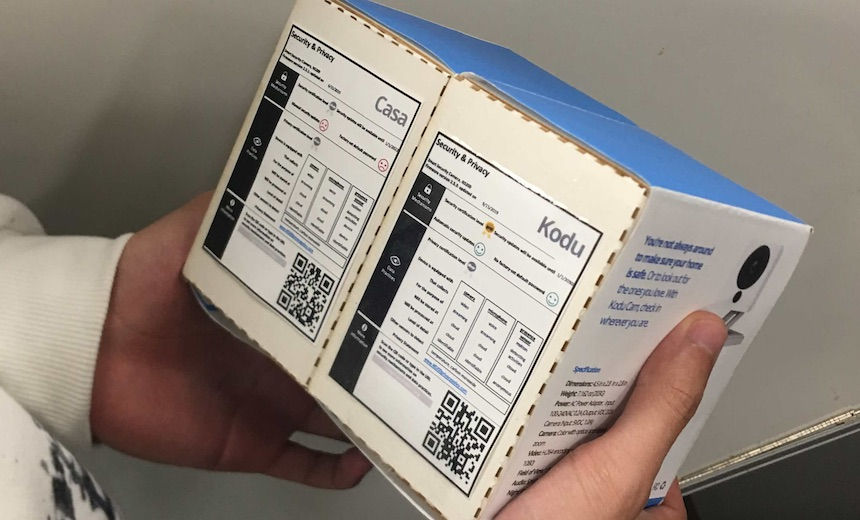
One key initiative gaining momentum in Australia and globally is IoT security labelling. Similar to energy efficiency ratings, security labelling provides a clear and transparent way to communicate the cybersecurity posture of connected devices, including practices such as encryption, authentication, update policies, and compliance with recognised standards.
Security labelling plays an increasingly important role in regulated and safety-critical environments, helping manufacturers, regulators, and end users understand whether a connected product meets essential security expectations before deployment.
This focus aligns closely with evolving regulatory requirements, including recent FDA guidance that places greater emphasis on cybersecurity as part of the overall risk profile of connected medical devices.
Because Genesys designs the entire system, from device and firmware through to mobile app and cloud, we are able to align practical engineering decisions with emerging security labelling frameworks and regulatory expectations from the earliest stages of development.
This means our clients benefit from:
Early alignment with evolving IoT cybersecurity standards
Guidance on security labelling readiness
Reduced regulatory risk late in development
Products designed with trust, transparency, and long-term maintainability in mind
We explore this topic in more detail in our blog post “Why Security Labelling Matters in the IoT Era”, where we discuss how security labelling helps build trust in a connected world.
The Genesys Promise
When reliability is mission-critical, Genesys is the partner companies trust.
We promise to deliver:
IoT-connected apps that are stable and frustration-free
Reliable device communication users can trust
End-to-end engineering from hardware to mobile app
A medically aligned, ISO-based development process
Systems designed to scale safely and securely
Or, as George defines it:
“If you want an IoT product that truly works, with a connection you never have to think about, that is where Genesys shines.”
In a world where reliability defines user trust, Genesys ensures your connected product lives up to its promise.
Partner with a team that delivers secure, reliable, end-to-end IoT systems built for real-world and regulated environments. Talk to our team today.