.png)
Gait Analysis
Monitor
Wearable sensing technology for objective gait monitoring.
Genesys partnered with the WAGAR research group to develop a wearable monitoring system capable of continuously capturing gait data and supporting objective clinical assessment.


The Technology
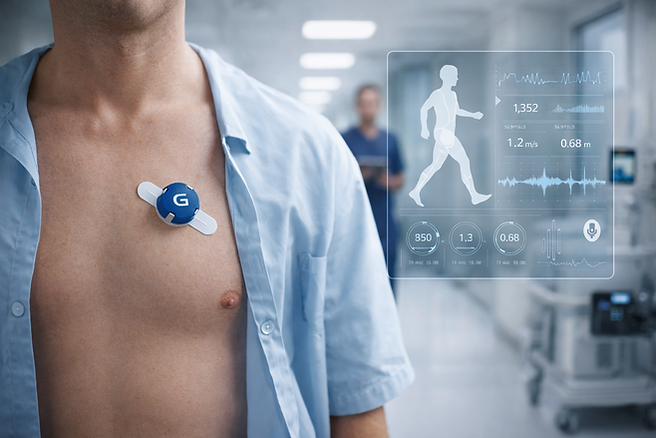
The WAGAR research group has developed advanced algorithms to analyse gait and mobility using measurable parameters such as step count, gait velocity, step length and posture. These metrics are combined into a Gait Posture Index, which can also incorporate additional gait quality indicators including cadence, stability, symmetry and foot support timing.
Using data captured from wearable sensors, the algorithms can help identify conditions affecting the spine, hip and knee, as well as neurological conditions such as stroke recovery, multiple sclerosis and Parkinson’s disease.
A key advantage of the system is the ability to analyse gait using a single measurement point, enabled by a wearable sensor device containing a 9-axis accelerometer.

The Challenge
As the WAGAR research group expanded its gait analysis research and moved towards commercialisation, it required a flexible wearable platform capable of supporting both current and future sensor technologies.
The system needed to collect objective gait data, integrate with analytical software platforms, and provide a scalable foundation for ongoing research and product development.
Existing commercially available wearable devices limited the group’s ability to customise hardware and incorporate additional health sensor data into its evolving gait analysis algorithms.

The Solution
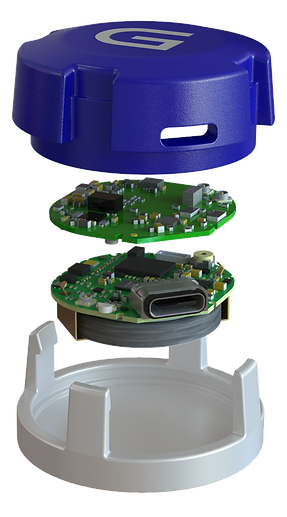
Genesys used its Wireless Wearable Sensing platform as the foundation for the WAGAR system, enabling rapid prototyping and providing a pathway toward a future commercial product.
The platform architecture includes:
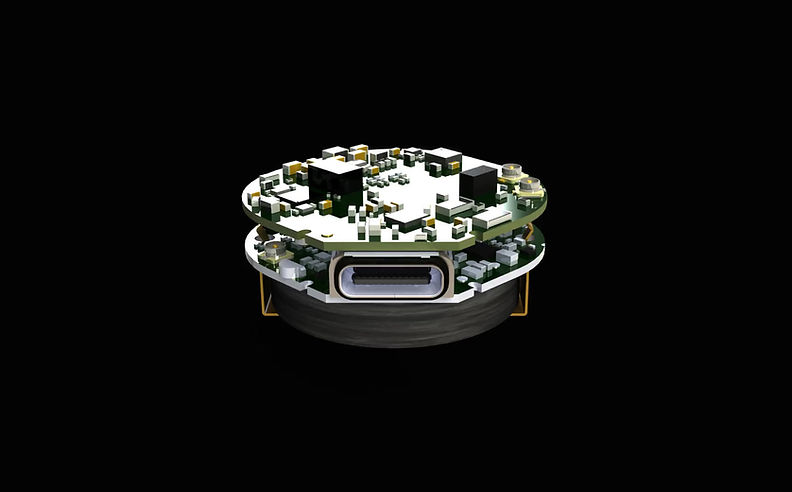
• A base electronics board supporting Bluetooth communication
• Integrated battery management systems
• Modular sensor interfaces
• A custom sensor board designed for WAGAR’s research requirements
The modular design allows the sensor board and enclosure to evolve through multiple development iterations. When WAGAR progresses toward product commercialisation, the system can be further miniaturised into a single integrated board design suitable for production.

Genesys Engineering Contribution
Genesys worked closely with the WAGAR research group to transform advanced gait analysis research into a practical wearable monitoring platform.
Leveraging its Wireless Wearable Sensing (WWS) technology, Genesys developed the system architecture required to capture, transmit and manage patient mobility data in real-world environments.
Key engineering contributions included:
• Development of the wearable sensing hardware platform
• Bluetooth connectivity for communication with the mobile application
• Battery management and low-power system design
• Design of a custom sensor board tailored to WAGAR’s research requirements
• Development of a modular architecture to support future sensor integration and product evolution
• Creation of a scalable pathway from research prototype to commercial medical device
By combining proven wearable technology with a flexible hardware architecture, Genesys enabled WAGAR to accelerate research activities while establishing a foundation for future clinical and commercial deployment.

Impact
The WAGAR wearable monitoring system provides a foundation for objective and continuous gait analysis, supporting both clinical research and future healthcare applications.
By combining wearable sensing technology with advanced analytical algorithms, the platform has the potential to improve how clinicians monitor recovery, evaluate treatment outcomes and detect early signs of neurological or musculoskeletal conditions.
From connected medical devices to diagnostic platforms, Genesys Electronics Design helps MedTech innovators bring their ideas to life.